
FRP Strengthening Contractor
A practical guide for owners, consultants, procurement teams, and facility managers choosing an FRP strengthening contractor for concrete columns, beams, slabs, and industrial structures.
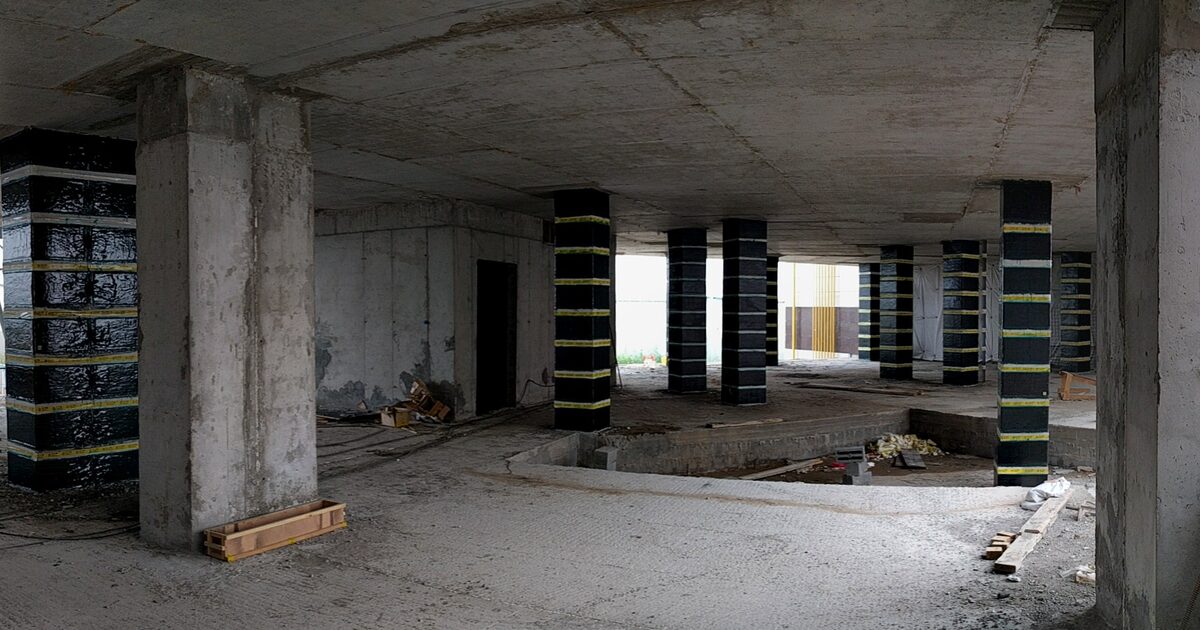
Choosing an FRP strengthening contractor is not simply a material purchase. Fiber Reinforced Polymer systems can be very effective for strengthening existing concrete structures, but the final performance depends on assessment, design intent, substrate condition, surface preparation, fiber orientation, resin compatibility, curing, anchorage, and installation quality.
For owners, consultants, facility managers, plant engineers, and procurement teams, the practical question is not only "Can this contractor install FRP?" A better question is: can the contractor determine whether FRP is the right method for this structure, then install it with the right preparation and quality control?
FRP can be useful for concrete columns, beams, slabs, walls, and selected industrial structures where the owner needs additional capacity with minimal added weight and minimal change to dimensions. It is often considered for active buildings because installation can be faster and less disruptive than concrete jacketing. But it is not a universal solution. A weak substrate, active corrosion, moisture, fire exposure, poor surface preparation, or the wrong fiber direction can make the system underperform.
This guide explains how to evaluate an FRP strengthening contractor, when CFRP or GFRP may be relevant, what should be checked before installation, and what information to prepare before asking for a proposal.
When Is an FRP Strengthening Contractor Relevant?
FRP strengthening is usually considered when an existing structure needs more capacity or better performance, but the owner wants to avoid major demolition, large section enlargement, or heavy additional dead load.
Common situations include:
- Concrete columns requiring confinement, ductility improvement, or capacity recovery.
- Beams needing flexural or shear strengthening.
- Slabs planned for new machinery, equipment, storage, or use changes.
- Structures with low concrete strength identified during assessment.
- Industrial buildings with limited shutdown windows.
- Commercial buildings, hospitals, schools, or facilities that must remain operational.
- Corrosion-sensitive environments where steel plate reinforcement may require heavy long-term protection.
- Retrofit work where additional structural weight must be minimized.
- Projects where jacketing is difficult because of headroom, architecture, equipment, or access constraints.
For a broader contractor-selection discussion, see Structural Strengthening Contractor in Indonesia. This article focuses specifically on FRP as a method and what buyers should expect from a contractor who installs it.
FRP, CFRP, and GFRP: What Buyers Should Understand
FRP stands for Fiber Reinforced Polymer. It is a composite system made from reinforcing fibers and resin. In structural strengthening, the two terms buyers usually encounter are CFRP and GFRP.
| System | Common Use | Practical Buyer Notes |
|---|---|---|
| CFRP - Carbon Fiber Reinforced Polymer | Flexural strengthening of beams and slabs, selected column or wall applications, high-strength strengthening needs | Higher tensile strength and stiffness. Often selected when the required performance is high and added thickness must stay minimal. |
| GFRP - Glass Fiber Reinforced Polymer | Column wrapping, confinement, corrosion-sensitive applications, moderate strengthening needs | Often more economical than carbon fiber and useful for wrapping or confinement when the design demand fits. |
| FRP wrapping or U-wrap | Column confinement, beam shear strengthening, joint or local strengthening details | Fiber direction and continuity matter. The contractor must understand the intended load path, not just wrap the surface. |
The choice between CFRP, GFRP, steel plate reinforcement, jacketing, or another method should follow the actual structural demand. FRP is attractive because it is light, thin, and corrosion-resistant, but it still needs a sound base and a proper design reason.
If your team is comparing FRP with other methods, the Indonesian service pages for FRP strengthening, carbon fiber strengthening, steel plate reinforcement, and column jacketing can help frame the alternatives.
What a Serious FRP Contractor Should Check First
FRP strengthening should not start from installation. It should start from the structural problem. A contractor who immediately offers a square-meter price without understanding the structure may be skipping the most important part of the work.
1. The Element and Its Structural Role
FRP installed on a beam, slab, column, or wall serves different purposes. Flexural strengthening, shear strengthening, confinement, impact resistance, and corrosion-related capacity recovery are not the same scope.
The contractor should ask:
- What element needs strengthening?
- What load or performance target is being addressed?
- Is the goal repair, capacity increase, seismic improvement, durability, or temporary risk reduction?
- Is the member still safe to access during inspection and installation?
- Is the structure still operating during the work?
Without this information, the FRP layout can become decorative rather than structural.
2. Concrete Substrate Condition
FRP systems rely on bond and force transfer. If the concrete surface and near-surface zone are weak, contaminated, honeycombed, wet, cracked, or delaminated, the system may not behave as expected.
Before installation, the contractor should review:
- Surface soundness and weak concrete removal needs.
- Crack pattern, crack activity, and whether injection is required first.
- Spalling, exposed reinforcement, or corrosion stains.
- Moisture, leakage, chemical exposure, oil contamination, or coating residue.
- Concrete strength or uniformity where it affects bond and design assumptions.
For uncertain concrete quality, an assessment method such as concrete UPV testing before structural strengthening may be useful alongside visual inspection, hammer test, rebar scanning, core drill testing, or structural analysis.
3. Damage Cause
FRP should not be used to hide symptoms. If a beam cracks because the load has increased, FRP may be relevant. If cracking is caused by settlement, active corrosion, uncontrolled leakage, or ongoing movement, the root condition must be addressed first.
For example:
- Corroded reinforcement may need concrete repair and corrosion treatment before FRP.
- Active leakage may need waterproofing or drainage correction.
- Settlement-related cracking may need foundation assessment.
- Machine vibration may require a review of dynamic loading and support conditions.
An experienced contractor should be willing to say when FRP is not the first step.
4. Fiber Direction, Anchorage, and Detailing
FRP performance depends heavily on fiber orientation. Carbon or glass fiber works primarily along the direction of the fibers. Installing the material in the wrong direction can miss the intended strengthening effect.
Important details include:
- Fiber direction for flexural, shear, or confinement demand.
- Edge preparation and corner radius for wrapping.
- Lap length and continuity.
- Anchorage or termination details where needed.
- Surface preparation before primer and resin application.
- Compatibility between primer, resin, fiber, repair mortar, and protective coating.
This is why FRP work should not be treated as a normal finishing job. The installation detail is part of the engineering solution.
5. Exposure, Fire, UV, and Long-Term Protection
FRP systems can be durable, but the exposed environment must be considered. Industrial heat, sunlight, chemical exposure, moisture, impact, abrasion, or fire requirements may influence product selection and protective coating.
The contractor should discuss whether the FRP system needs:
- UV protection or protective coating.
- Fire protection or architectural covering.
- Impact protection in forklift or loading areas.
- Additional detailing in wet or chemical environments.
- Maintenance access and inspection plan.
For projects requiring material supply, technical selection, and installation support, Struktura also provides MAPEI product supply and application in Indonesia.
FRP Contractor Selection Checklist
When comparing FRP contractors, do not evaluate only the price per square meter. The lower price can become expensive if the scope excludes surface preparation, repair, access, protection, QA/QC, or engineering review.
Use this checklist:
| What to Check | Why It Matters |
|---|---|
| Assessment-first approach | The contractor should confirm why FRP is suitable before pricing installation. |
| Structural understanding | FRP layout must match the element, load path, and target capacity. |
| Substrate preparation scope | Grinding, cleaning, weak concrete removal, crack injection, repair mortar, and primer work affect bond quality. |
| Product system knowledge | Primer, resin, fiber, saturant, repair mortar, and coating should be compatible. |
| Installation QA/QC | Fiber orientation, resin saturation, curing, temperature, surface condition, and documentation need control. |
| Industrial access planning | Active factories and warehouses need work windows, permits, safety coordination, and area isolation. |
| Clear exclusions and assumptions | A good proposal should state what is included, what depends on site inspection, and what data is still missing. |
| Documentation | Method statements, material data sheets, photos, inspection records, and as-built notes help procurement and owners manage risk. |
If the project is in an active industrial facility, also ask how the contractor will manage production constraints, safety induction, permit-to-work, working at height, dust, odor, curing time, and area reopening.
Common FRP Applications in Buildings and Industrial Facilities
FRP is used differently depending on the element and the project objective. Below are common applications that procurement and facility teams often ask about.
Column Wrapping and Confinement
FRP wrapping can help improve column confinement, ductility, and selected capacity demands. It is often considered when columns have low concrete strength, require seismic performance improvement, or need capacity recovery after repair.
For columns with severe damage, heavy section loss, or large capacity deficiency, column jacketing may still be more appropriate. The contractor should explain the trade-off instead of forcing one method.
Beam Strengthening
CFRP can be used for flexural strengthening at the tension face of beams, while U-wraps or side wraps may be used for shear strengthening depending on design needs and access.
Beam strengthening requires careful attention to surface preparation, crack treatment, fiber direction, anchorage, and whether the load can be managed during installation.
Slab Strengthening
Slabs may need strengthening for new equipment, storage loads, water tanks, service changes, or local capacity deficiencies. CFRP can be useful when additional thickness and weight must be minimized.
Before slab strengthening, the contractor should review span direction, reinforcement direction, cracking, deflection, openings, existing loads, and future use.
Corrosion-Sensitive Environments
In coastal, wet, or chemical environments, FRP can be attractive because it does not corrode like exposed steel. However, FRP is not a shortcut around concrete repair. If reinforcement corrosion is active, the damaged concrete and corrosion mechanism still need to be handled.
Active Factory or Warehouse Work
FRP can be useful in facilities that cannot stop operations for long periods because it is thin and often faster to install than concrete enlargement. Still, the work needs access control, surface preparation, curing time, safety planning, and coordination with production.
For industrial strengthening more broadly, see structural repair and strengthening services.
What to Send Before Asking for an FRP Proposal
To get a useful response from an FRP strengthening contractor, prepare a short project brief. It does not need to be perfect, but it should help the contractor avoid guessing.
Send the following:
- Project location and site type: factory, warehouse, hospital, commercial building, school, port facility, plant, or other asset.
- Photos: wide photos, close-up damage photos, and access photos around the element.
- Element type: column, beam, slab, wall, joint, machine foundation, or other structure.
- Symptoms: cracks, spalling, corrosion, honeycomb, deflection, vibration, leakage, or previous repair failure.
- Objective: load increase, repair, capacity recovery, seismic improvement, audit response, procurement estimate, or execution.
- Available data: drawings, calculations, equipment loads, test results, previous repair records, or consultant notes.
- Constraints: operating hours, shutdown window, access permit, working height, safety rules, odor/dust limits, and target schedule.
- Decision stage: early consultation, budget estimate, tender, urgent site review, or execution-ready scope.
This information helps separate an initial consultation from a site assessment, design discussion, or installation proposal.
Cost Factors for FRP Strengthening Work
FRP strengthening cost depends on more than area. Two projects with the same FRP quantity can have very different prices if one requires concrete repair, difficult access, night work, or detailed documentation.
Key cost factors include:
- Element type and number of elements.
- Required FRP type, layer count, fiber direction, and detailing.
- Concrete repair, crack injection, or corrosion treatment before FRP.
- Surface preparation difficulty.
- Access method, scaffolding, lifting equipment, or confined work area.
- Shutdown window, weekend work, night work, or phased execution.
- Protective coating, fire protection, or finishing.
- Testing, engineering review, QA/QC, and reporting requirements.
- Mobilization outside Jakarta, West Java, or major industrial corridors.
For procurement teams, the first useful output is often a scope boundary, not a final price. Clarify what can be priced from current documents, what needs site inspection, and what assumptions may change after assessment.
How Struktura Supports FRP Strengthening Projects
Struktura Engineering helps owners, consultants, facility teams, and procurement teams define and execute structural repair and strengthening work based on engineering judgment.
For FRP-related projects, support may include:
- Initial review based on photos, location, drawings, symptoms, and project objective.
- Site visit and condition mapping.
- Assessment planning where concrete quality, cracks, corrosion, or substrate condition is uncertain.
- Method recommendation comparing FRP, CFRP, GFRP, jacketing, steel plate reinforcement, injection, or concrete repair.
- FRP installation planning around active building operations or industrial work windows.
- MAPEI system selection and application support where suitable.
- Documentation for internal review, procurement, consultants, or asset owners.
If your team already knows FRP may be needed, send the element photos, structure type, target load or problem, available drawings, and work-window constraints first. From there, the discussion can move from generic pricing to the right technical scope.
Need an FRP strengthening contractor?
Send the project location, affected element, site photos, damage symptoms, available drawings, target load or use change, and work window. Struktura can help define whether FRP, CFRP, GFRP, repair, jacketing, or another method is the right next step.
Discuss FRP ScopeFAQ
Is FRP always better than jacketing or steel plate reinforcement?
No. FRP is useful when a light, thin, corrosion-resistant, and relatively fast strengthening method fits the structural demand. Jacketing may be better for severe section damage or large capacity increases. Steel plate reinforcement may be useful when stiffness, anchorage, or project-specific detailing favors steel. The method should follow assessment and design needs.
Can FRP strengthening be installed while a factory is operating?
Often yes, but the work must be planned around access, safety, surface preparation, resin application, curing time, ventilation, and area isolation. Some work can be phased by zone. Critical areas may need a shutdown window.
Do we need concrete testing before FRP?
Not always, but testing is often useful when concrete quality is uncertain, cracks are present, substrate strength matters, or the strengthening has significant structural demand. UPV, hammer test, core drill, or rebar scanning may be recommended depending on the case.
Can FRP be installed over cracked or spalled concrete?
FRP should not be installed over unsound concrete. Cracks, spalling, corrosion, honeycomb, moisture, or contamination usually need to be evaluated and treated first. The contractor should define repair and surface preparation before FRP installation.
What information should procurement request from an FRP contractor?
Request method assumptions, surface preparation scope, material system, layer count or design basis where applicable, access assumptions, curing time, QA/QC steps, exclusions, required site data, and documentation deliverables. A clear technical scope is more useful than a vague square-meter price.
Does Struktura supply FRP materials only?
For selected MAPEI systems, Struktura can support product supply and technical selection through MAPEI product supply and application in Indonesia. For structural FRP work, the material choice should still follow the element condition and intended structural function.