
Find the Areas That Need Closer Investigation
When an existing building has patch repairs, varied concrete appearance, or limited material records, the first question is often where to investigate further. A rebound hammer test provides a practical way to screen surface response across selected concrete elements. Comparing a planned set of points can show relative variation and help prioritize the next check.
Struktura provides concrete Hammer Test services for buildings and industrial facilities across Indonesia. We define the zones, surface preparation, access, and report around the owner's decision. A list of instrument readings alone cannot show whether a structure can carry a new load; that question belongs in a structural assessment with the required material, reinforcement, geometry, and load data.
Start with the decision, then choose the points
Send the location, building use, element or zone list, photos of typical and damaged surfaces, accessible areas, any drawings, and the report deadline. A comparable screening plan can then be discussed before pricing.
When a Hammer Test Is Worth Requesting
- Screen an existing building with incomplete records. Compare the surface response of relevant columns, beams, slabs, walls, or pedestals and identify unusual zones for verification.
- Prepare for renovation or new operating loads. Use screening as one input before a wider assessment of machinery, racking, mezzanines, tanks, or a changed building function.
- Compare elements and casting zones. Group points by element type and site condition so variation has a useful reference rather than becoming an unstructured number list.
- Choose where to investigate next. A markedly different zone may warrant inspection, UPV testing, a concrete core, or other work chosen for the question.
- Support maintenance or due diligence. Provide documented screening that helps engineering and procurement decide where a deeper investigation budget is justified.
A Schmidt rebound hammer records rebound number from a spring-driven impact on hardened concrete. ASTM C805/C805M-25 and SNI 03-4430-1997 are the cited testing references on the Indonesian service page. Readings are useful for comparing surface response. Surface texture, moisture, carbonation, finishes, instrument orientation, member stiffness, and instrument differences can change the result.
| Hammer Test can support | What needs other evidence |
|---|---|
| Rebound readings tied to named points. | Actual compressive strength from a generic instrument curve alone. |
| Comparison of surface response across comparable elements or zones. | Detection of internal voids, cracks, or reinforcement layout. |
| Selection of places for additional checks. | Whole-structure capacity, safety, or acceptance decisions. |
Strength estimation requires a suitable correlation for the concrete being investigated. Where a project decision depends on direct compressive-strength data, concrete coring and laboratory testing (Indonesian) may be appropriate. After an earthquake, rebound readings are only one possible input to a damage assessment; they cannot determine reoccupation by themselves.
How We Make the Screening Comparable
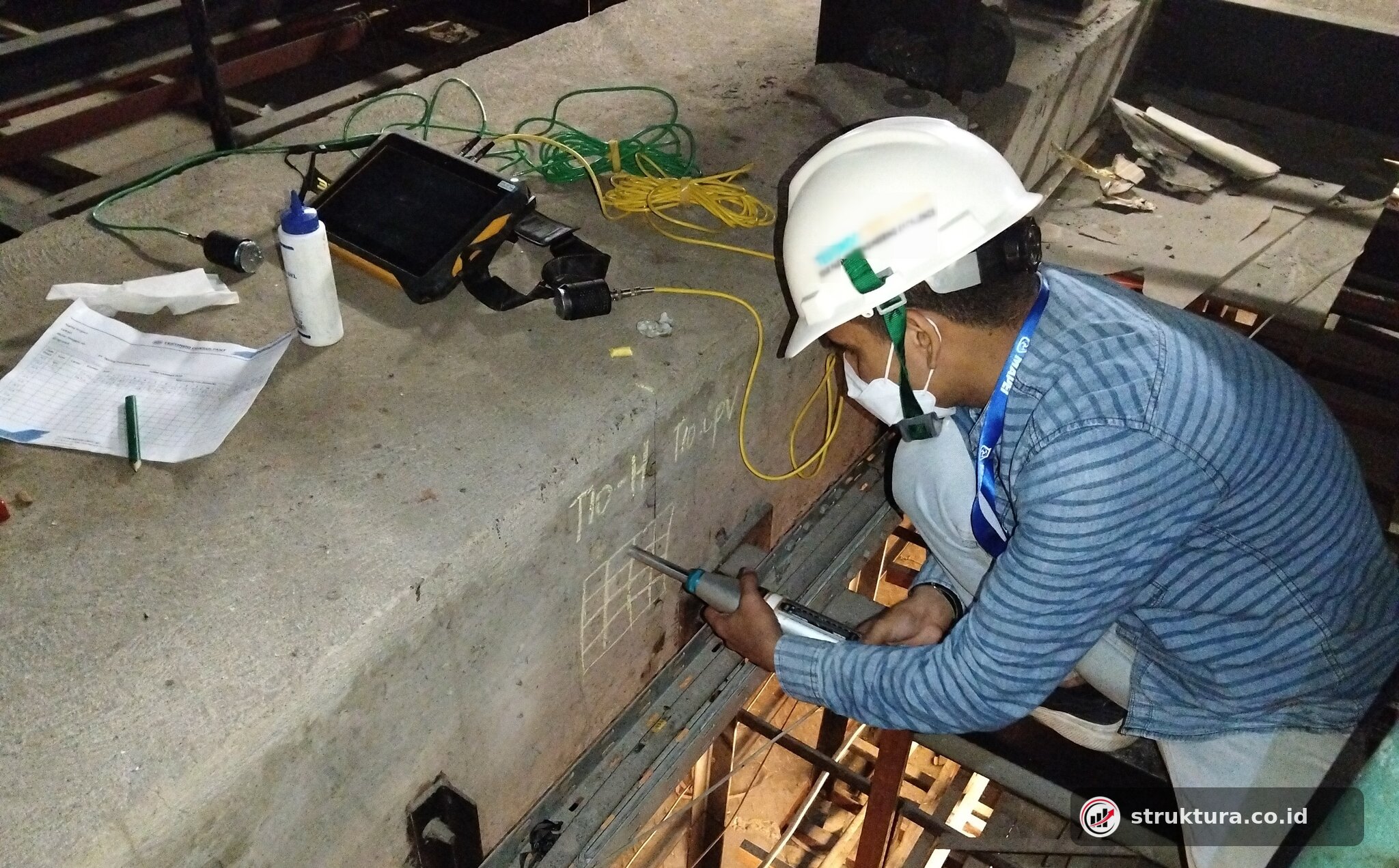
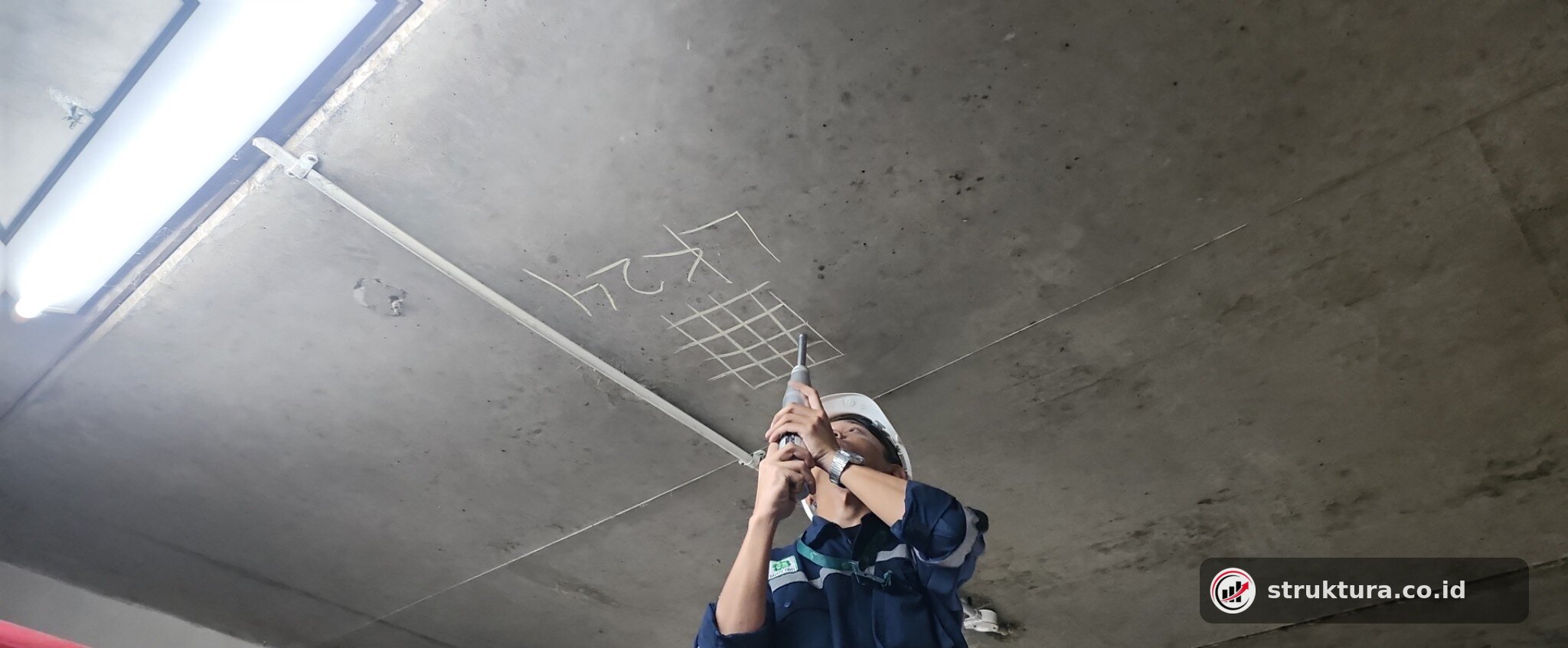
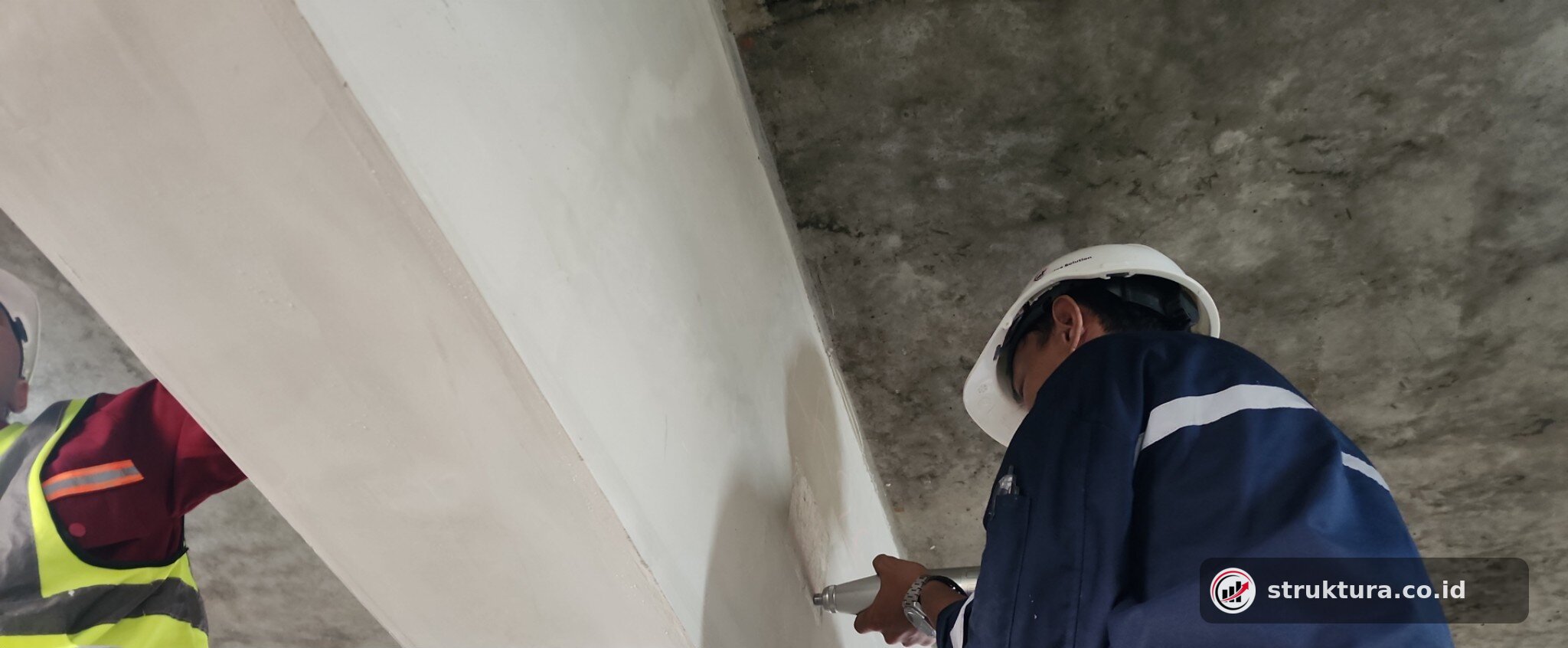
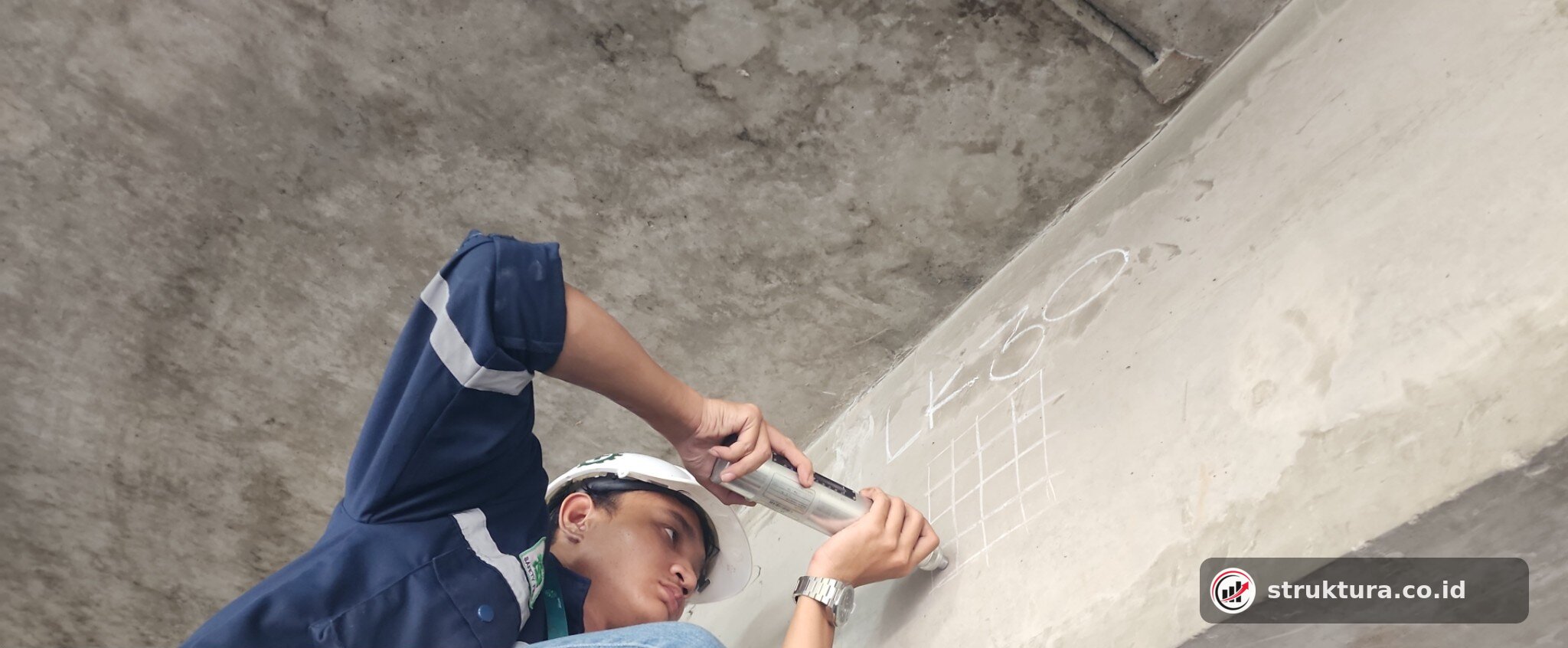
The scope begins with the decision and existing records, then groups the elements and zones to be compared. Test locations are chosen to represent typical and suspect conditions, not merely the easiest surface to reach. Before testing, the team reviews coatings, plaster, roughness, moisture, height, utilities, and access equipment. The hammer's function is checked, the surface is prepared as needed, a point pattern is marked, and the hammer orientation and surface condition are recorded with the readings.
After field collection, readings are reviewed by element and zone. The interpretation identifies relative variation, conditions that may explain it, and whether another method or an assessment is needed. Point count is therefore a scope decision, not a fixed package for every building.
Field Examples
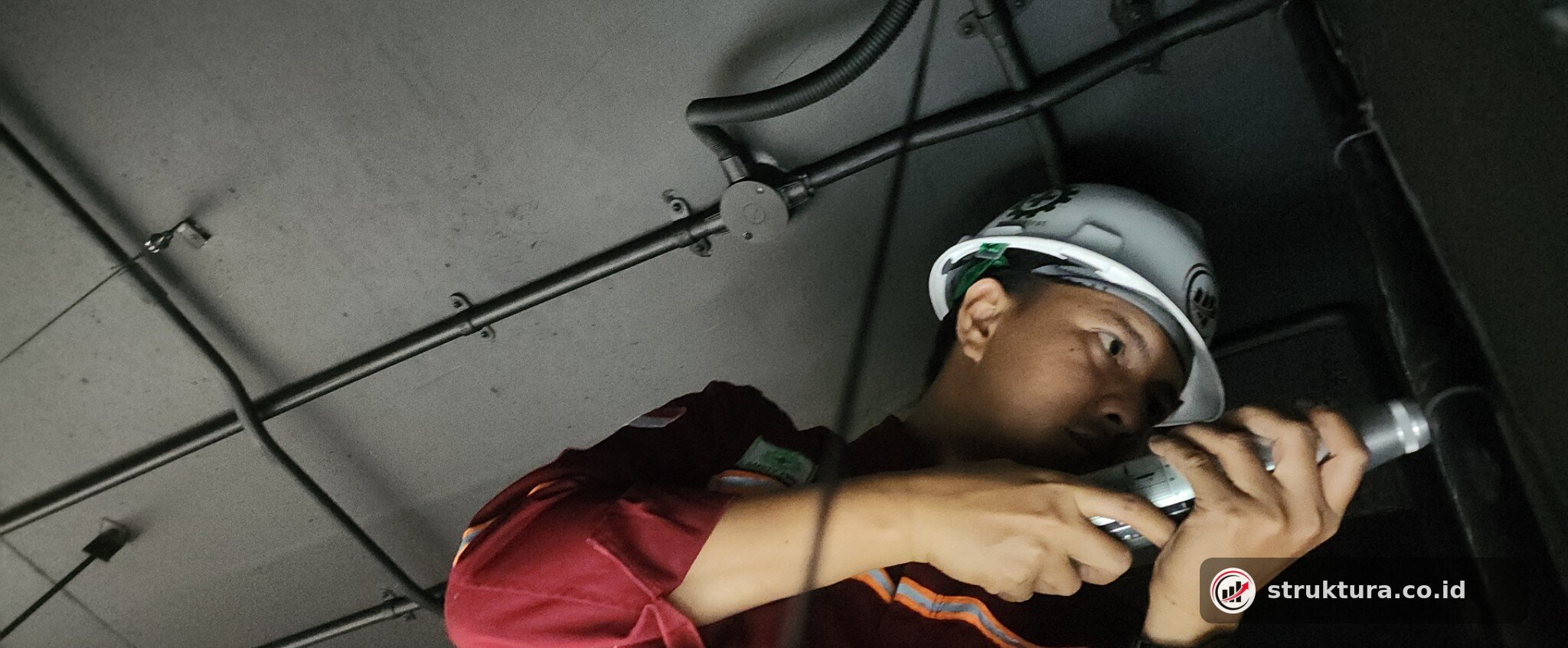
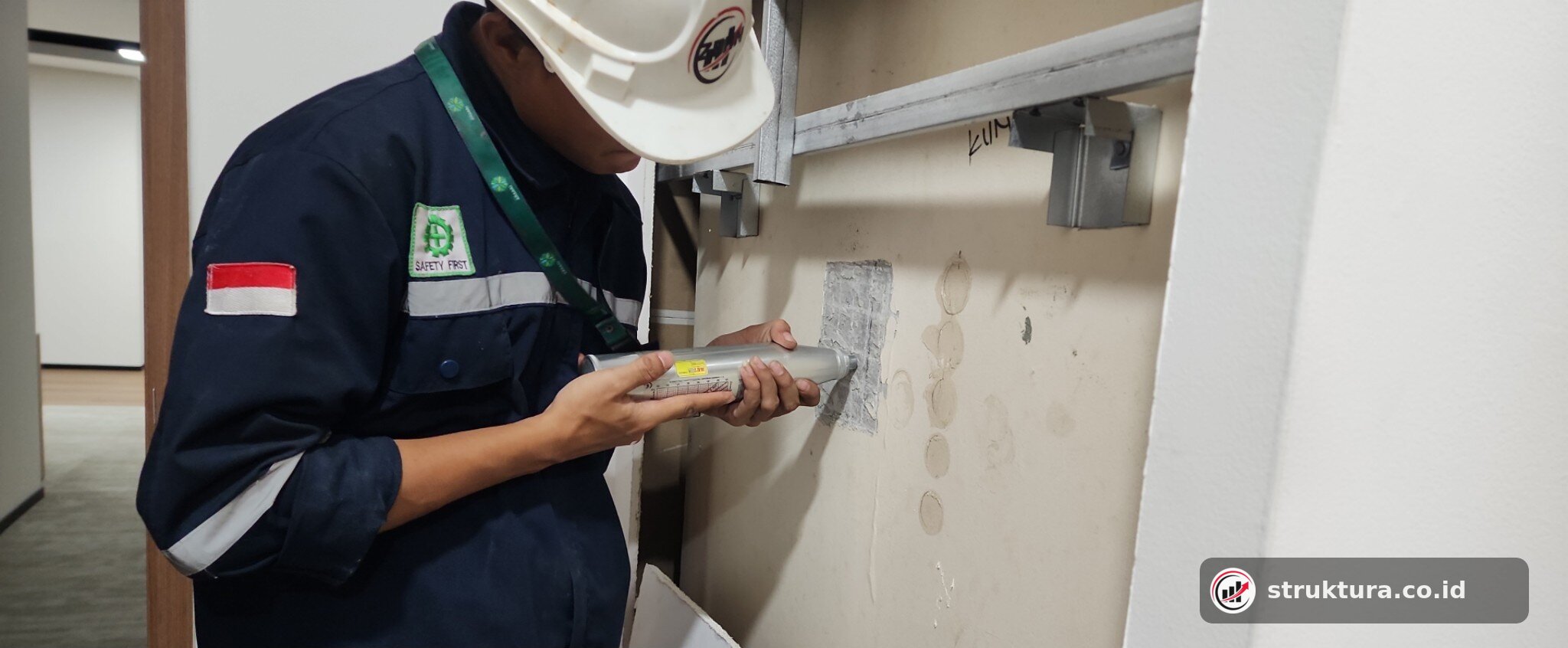
The following photographs illustrate surface preparation, marked point grids, and access conditions. They are workflow documentation and do not establish the strength or safety of the pictured elements.
A Report for the Next Decision
Agree on the deliverable before fieldwork. Depending on scope, a useful Hammer Test report identifies the inspected elements, point locations, surface conditions, hammer orientation, rebound readings, zone summaries, photos, interpretation basis, limitations, and areas requiring further investigation. It should tell engineering what the screening indicates and where the current evidence stops.
| Project question | Method to consider |
|---|---|
| How do concrete surfaces compare across many planned points? | Concrete Hammer Test. |
| Are there indications of variation within the concrete? | UPV Test. |
| Is direct compressive-strength data needed? | Concrete cores and laboratory testing. |
| Where are the bars before a core or opening? | Rebar Scanning. |
| Can an element carry a new load? | Structural assessment with relevant engineering analysis. |
The quotation depends on the purpose, element types, number and spread of zones, finishes, access at height, work hours, site permits, travel, and required report depth. Send a plan or element list if available, but do not guess a point count. For a remote facility, drawings, photographs, HSE requirements, and an on-site contact help plan realistic field days and reduce return visits. Work in an operating facility may be staged by area after actual access and risk are reviewed.
Concrete Hammer Test FAQ
Does the test damage concrete?
It does not extract a sample, but local finish removal may be needed to expose a suitable concrete surface.
Is rebound number the actual compressive strength?
No. It is a surface-response reading. A strength estimate needs an appropriate correlation for the concrete under investigation.
When is a core needed?
Consider coring when the decision requires direct strength data, when a correlation is being developed, or when screening shows a zone needing confirmation. Coring is intrusive and its location must be planned.
How many points will be tested?
The count depends on the element groups, zones, comparison objective, condition variation, and access. It is set after the project information is reviewed.
Can work continue while the facility operates?
Often, but the schedule depends on permits, working at height, traffic, utilities, HSE rules, and any area that needs temporary restriction.
Is the report enough for SLF or a building-safety declaration?
No. It is one source of material-condition information. Formal approval or a safety conclusion needs the applicable wider assessment and authority process.
What most affects price?
Point spread, element types, floors, surface preparation, access equipment, work hours, location, mobilization, and the reporting scope.
Can Struktura serve projects outside Java?
Yes, through planned mobilization. Send location, photos, elements, access conditions, and the target date so travel and field days can be priced.
Request Screening That Leads to a Decision
Tell us why the concrete is being checked and which zones must be compared. We can then propose points, access needs, reporting, and any confirmation method.
Plan a Hammer Test