
Investigate the Concrete Condition Behind a Project Decision
A crack, honeycombed area, or inconsistent previous test result often raises a practical question: which parts of the concrete need closer investigation before repair, strengthening, or a load change is approved? A concrete UPV test helps compare pulse velocity across defined elements and zones. The useful output is a mapped pattern interpreted alongside the site condition, rather than an isolated number.
Struktura scopes UPV work around the decision at hand: the elements to compare, accessible surfaces, test configuration, operating constraints, and report required by engineering or procurement. For an investigation that also needs load review or structural capacity evaluation, use the broader structural assessment service. After an earthquake, UPV is one input within a damage assessment; its readings alone do not establish whether an area can be reoccupied.
What to send first
Provide the project location, purpose of testing, affected elements, photos of normal and suspect areas, any drawings, which faces of each element are accessible, site access rules, and the report deadline. We can use that information to propose a suitable test-point plan.
Where UPV Adds Value
- Suspected voids, honeycombing, or internal cracking: compare a suspect zone with appropriate reference areas, then decide whether an opening, core, or another investigation is warranted.
- Uneven Hammer Test readings: pair surface-response screening with a method that measures pulse travel through concrete, rather than simply increasing the number of rebound readings.
- Existing concrete before bonded repair or strengthening: check for significant variation that may affect the investigation and preparation scope. UPV alone does not approve a substrate or select a strengthening system.
- New machinery, racking, mezzanines, or other loads: add material-condition data to an assessment that also reviews geometry, reinforcement, loads, and capacity.
- Fire, impact, prolonged leakage, or deterioration: map relative differences where damage may not be uniform, using test locations chosen for the incident and access conditions.
- Asset audit or CAPEX planning: produce traceable field data and an interpretation that identifies remaining uncertainty before a repair budget or further investigation is approved.
UPV measures ultrasonic pulse transit time through a known path length and calculates apparent pulse velocity. The method can help compare concrete uniformity, indicate possible discontinuities, and monitor changes when testing conditions are controlled. ASTM C597-22 does not treat a UPV reading as a direct measurement of compressive strength. A project-specific relationship and supporting tests would be needed for strength estimation.
Choose the Test Configuration Before Mobilization
| Site access | Configuration to consider | Consequence for the scope |
|---|---|---|
| Two opposing faces available | Direct transmission | Transducers can be placed opposite each other, with the path length measured through the element. |
| Two faces available but not opposing | Semi-direct transmission | The actual pulse path and transducer positions must be documented. |
| Only one face accessible | Indirect transmission | Point spacing and procedure must be kept consistent; results need configuration-aware interpretation. |
Direct and indirect readings should not be compared as though their propagation paths were identical. Before pricing, we need to know the element thickness, exposed faces, finishes, ceiling or utility obstructions, height, and room to work. Moisture, reinforcement aligned with the pulse path, crack orientation, coupling, path-length accuracy, instrument settings, and signal stability can also affect readings.
The scope normally proceeds from document and photo review to element grouping, reference and suspect test-point selection, access planning, zero-time check, surface preparation, path-length measurement, reading quality checks, and engineering interpretation. Unstable readings are checked in the field before a pattern is reported. ACI 228.2R-13 provides further context for selecting and reporting NDT methods.
Field Work and Access Examples
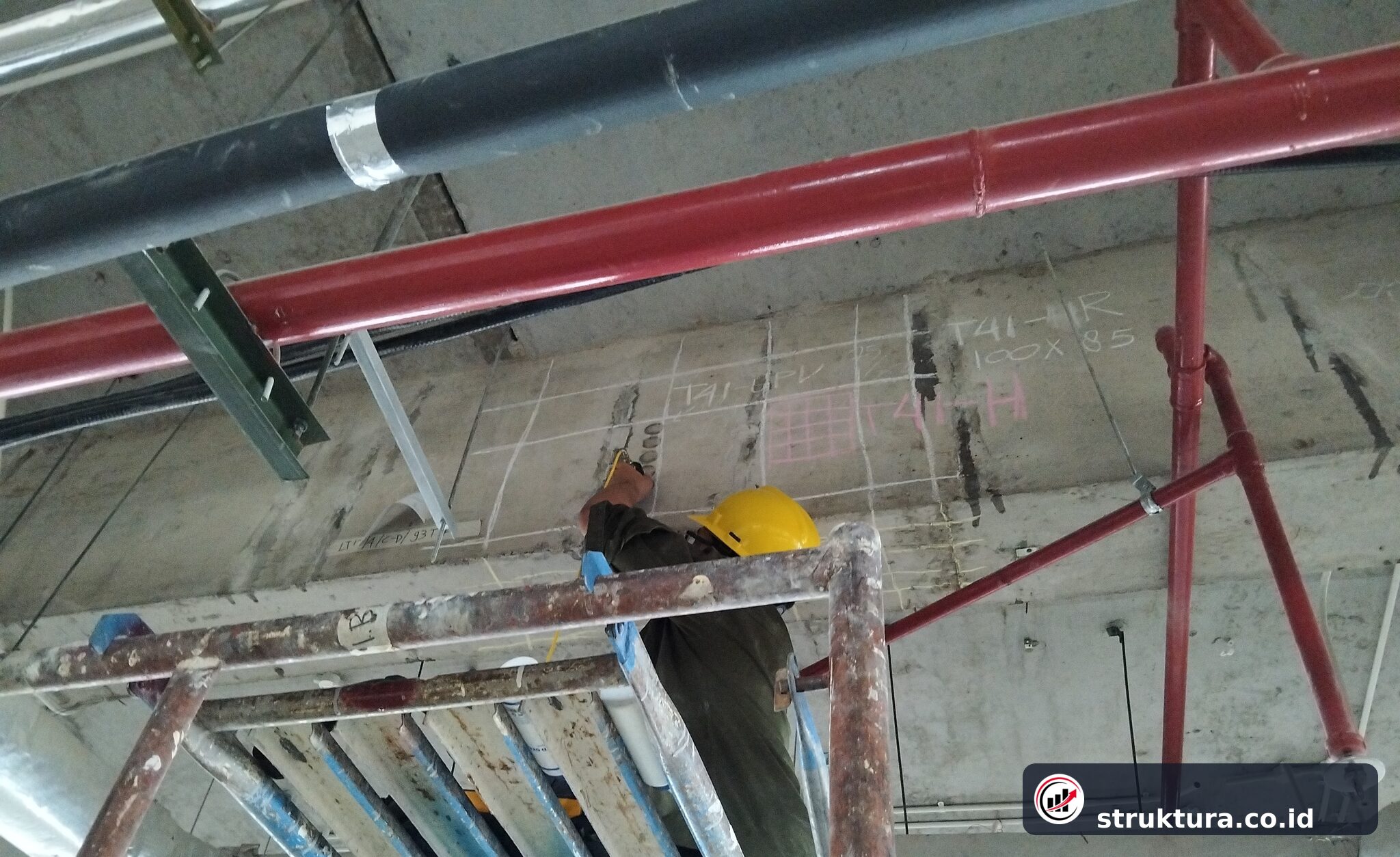
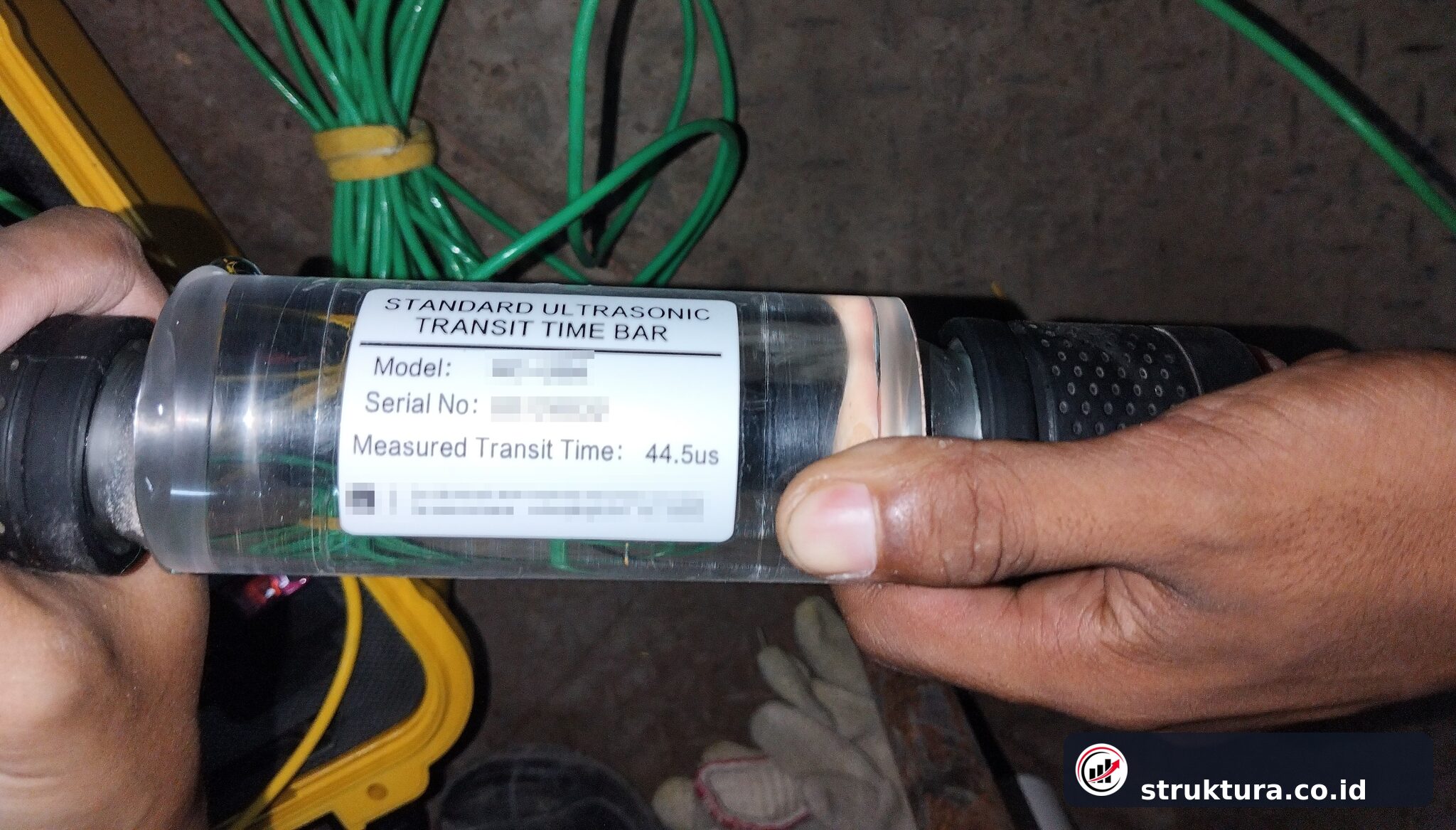
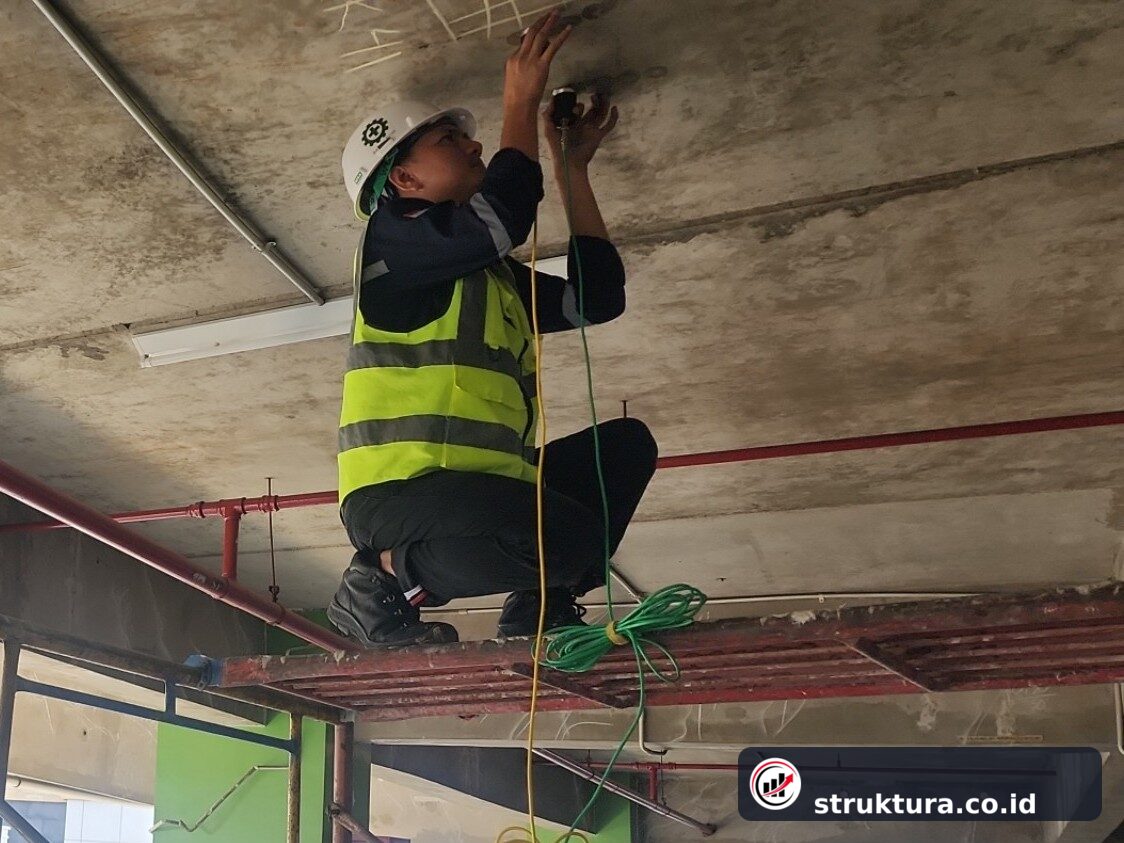
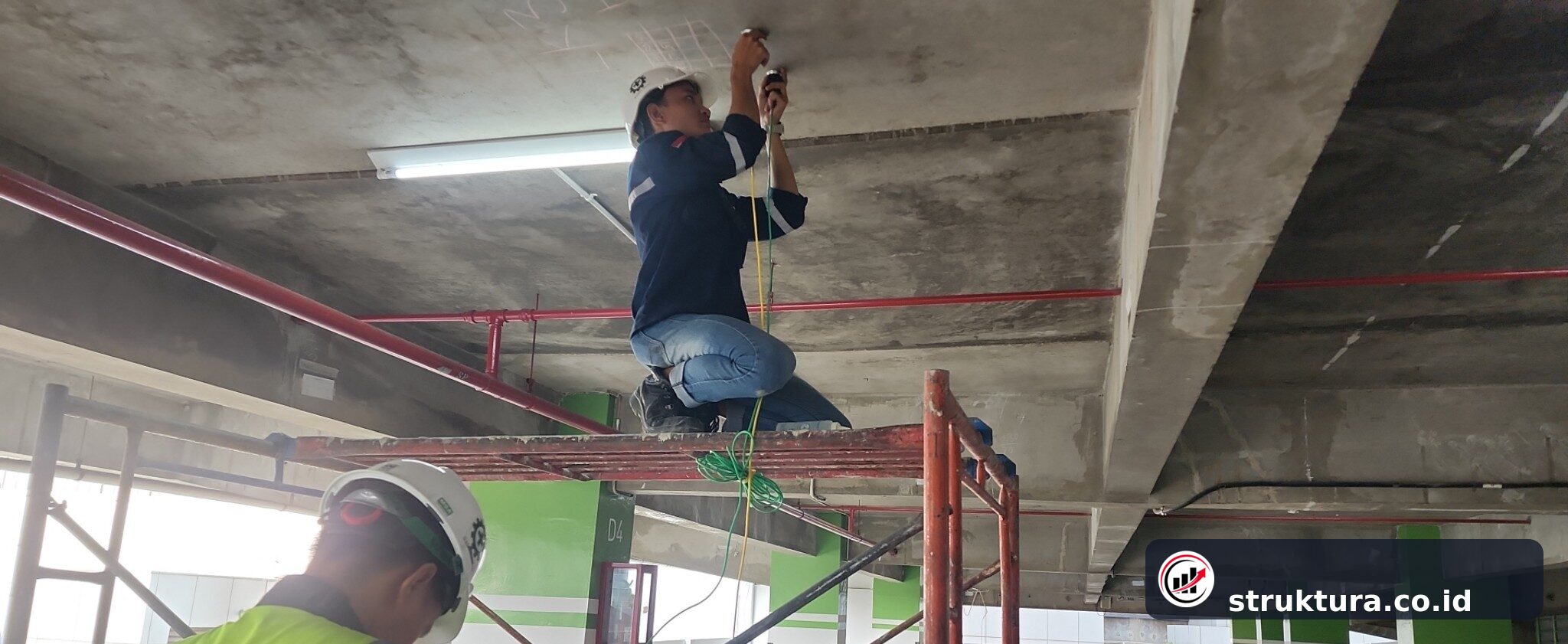
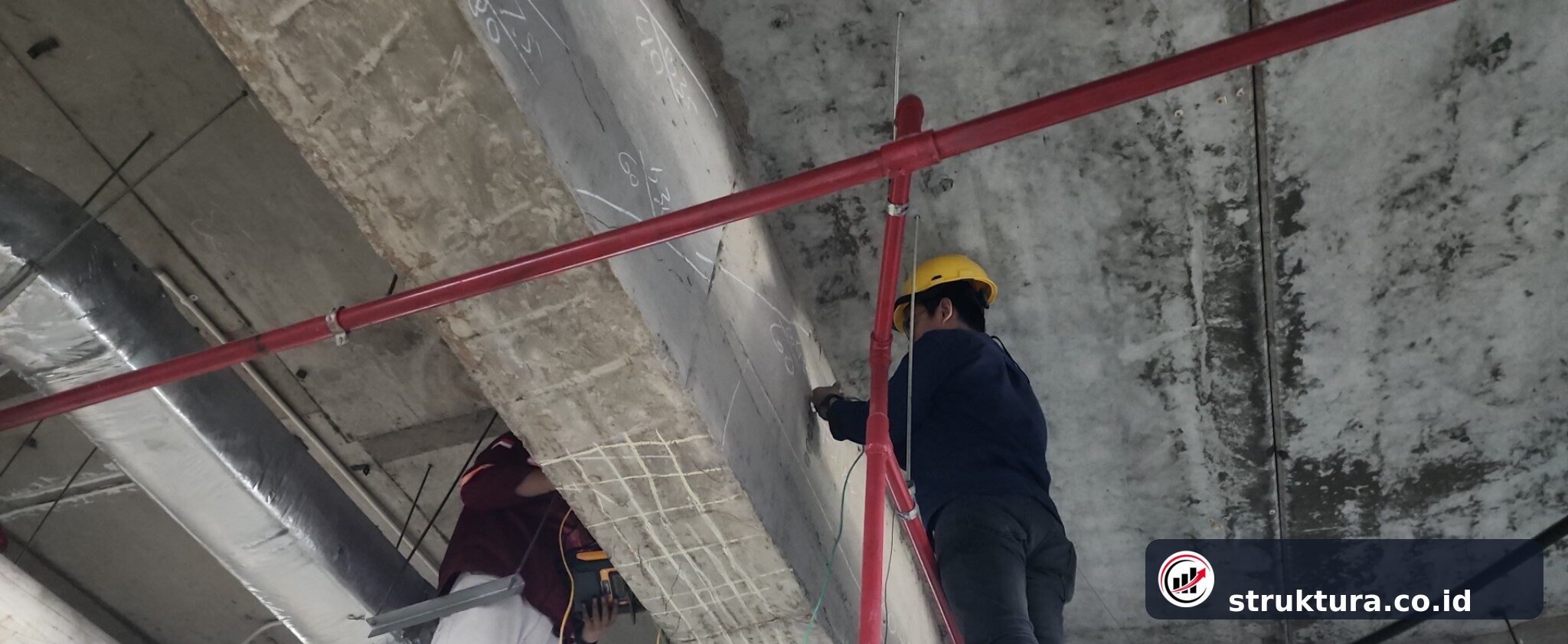
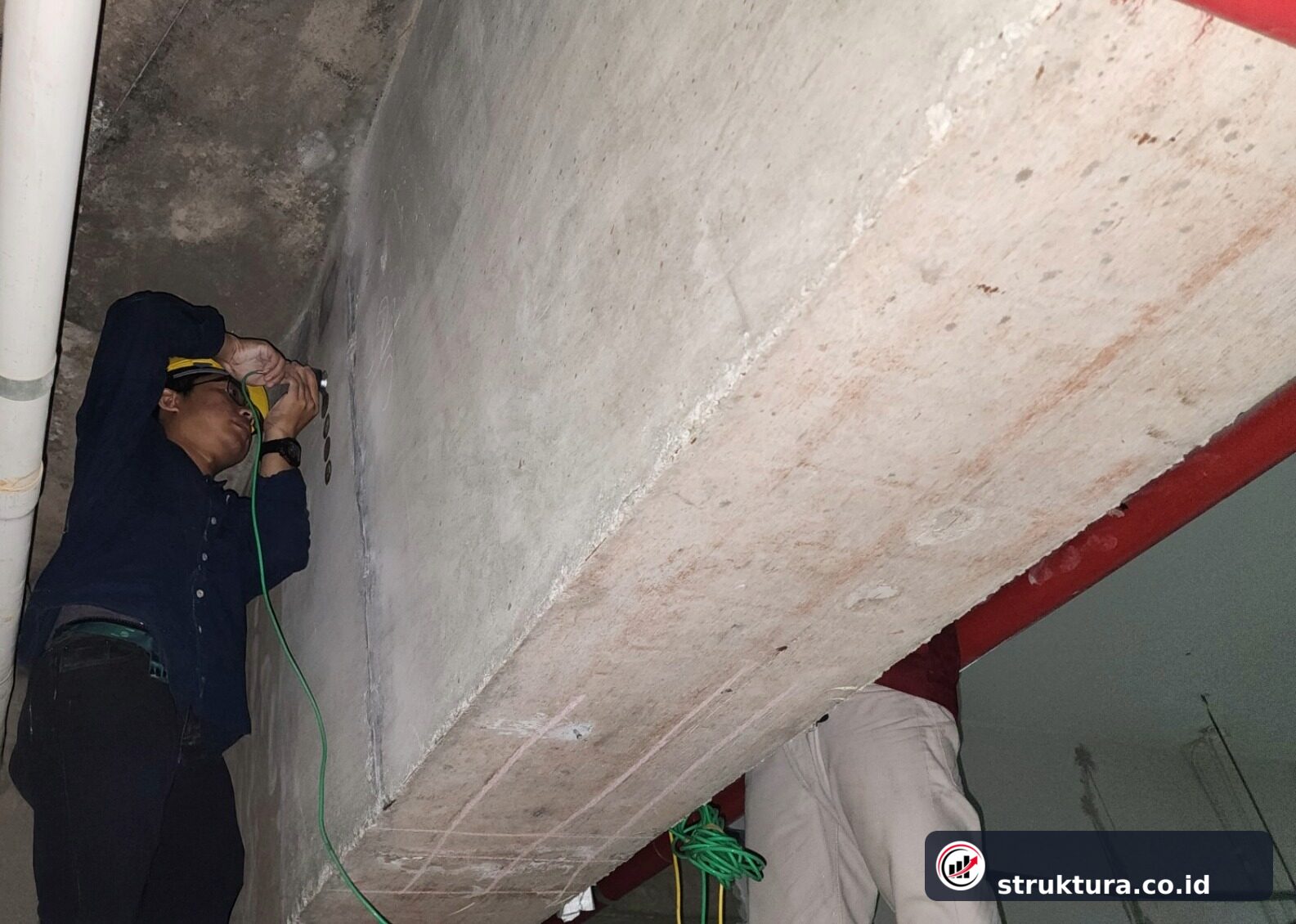
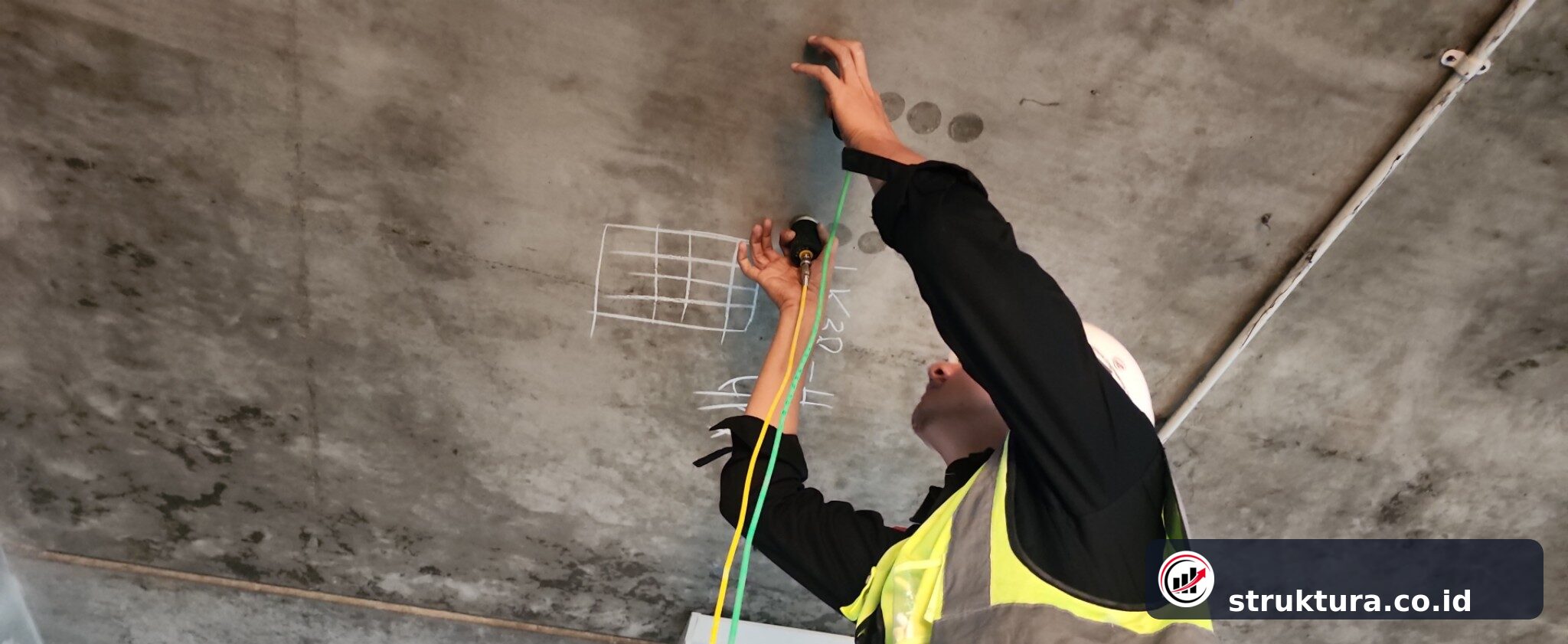
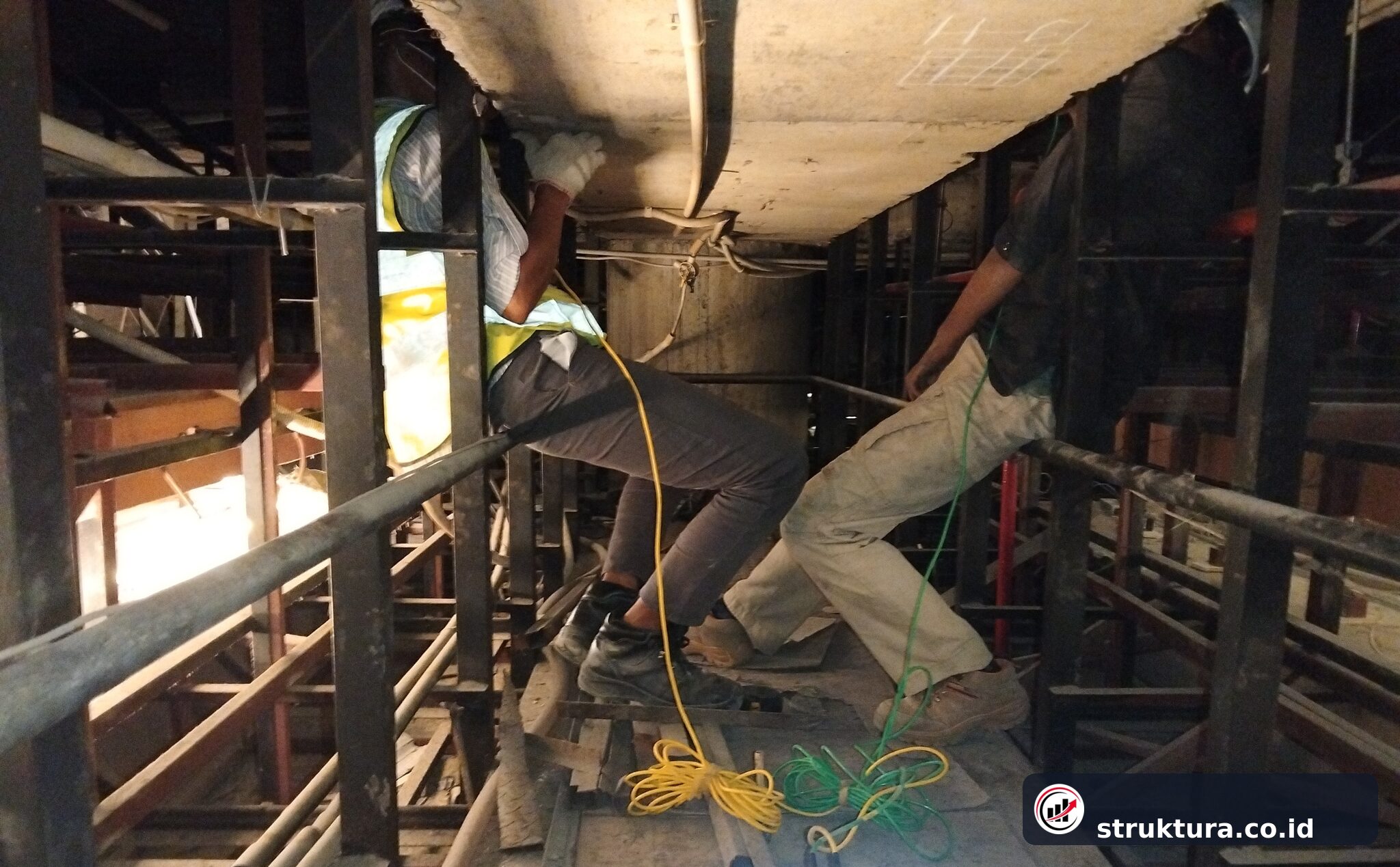
These photographs document test-point preparation, equipment checks, and transducer placement. They illustrate workflow, not a measured strength or a capacity conclusion for the pictured structure.
What the Report Helps Your Team Decide
A useful report connects the objective to mapped test points, configuration, path length, transit time, apparent velocity, surface and access conditions, relevant visual findings, assumptions, and limitations. It compares patterns across the agreed zones and explains where monitoring, concrete coring, repair investigation, or wider structural assessment may be needed.
For procurement, agree in advance whether the deliverable is field readings, a test report with interpretation, or a broader engineering assessment. These are different scopes. UPV can help select locations for concrete coring (Indonesian), while Rebar Scanning helps locate reinforcement before intrusive work. The factory UPV guide explains its role before strengthening.
| Question to resolve | Suitable route |
|---|---|
| Are concrete surface responses relatively consistent? | Concrete Hammer Test for screening. |
| Does pulse velocity vary across defined areas? | UPV with a consistent configuration and reference areas. |
| Is a direct concrete strength result needed? | Coring and laboratory testing at selected locations. |
| Where are reinforcement and cover? | Rebar Scanning. |
| Can the structure take a proposed load? | Structural assessment integrating condition, geometry, reinforcement, loads, and analysis. |
Define the Proposal Around Access and Decisions
The number of points and the price depend on the question, element groups, comparison zones, accessible faces, finish removal, work at height, permits, operating window, travel, and report depth. Two buildings of equal area can require different UPV scopes. Send the site location, building function, element list, photos, available drawings, dimensions and accessible surfaces, previous test data, HSE rules, and the required report date. A point count can then be proposed from the areas that need to be represented.
Testing in an operating factory, warehouse, or hospital may be scheduled by zone, subject to actual access and safety rules. Full uninterrupted operation should only be confirmed after the work area, permits, and risks have been reviewed. For projects outside Java, the proposal also needs realistic field days, travel, accommodation, equipment transport, and site readiness.
Concrete UPV Test FAQ
Does UPV testing damage concrete?
It does not remove a concrete sample. Local removal of a finish or coating may still be needed for reliable transducer contact.
Can pulse velocity be converted directly to compressive strength?
No. Strength estimation needs a defensible relationship developed for the relevant concrete, with suitable supporting data. A core and laboratory test may be needed when direct strength data matters.
Must both sides of an element be accessible?
No. Direct testing uses opposing faces; semi-direct or indirect arrangements may be possible with different access. The configuration must fit the decision and be recorded in the report.
Can direct and indirect results be compared directly?
They have different pulse paths. Any comparison needs a consistent method or an engineering explanation of the difference.
When should UPV be combined with Hammer Test or coring?
Combine methods when UPV cannot answer the decision on its own. Hammer Test adds surface-response screening; coring can supply samples for laboratory strength testing and correlation where needed.
How many test points are required?
There is no universal count. The number depends on element groups, reference and suspect zones, access, and the certainty required by the decision.
Can testing be done while a facility operates?
Often it can be planned around operations, but permits, working at height, traffic, restricted areas, and temporary isolation must be agreed for the actual site.
Does a UPV report establish building safety or satisfy SLF requirements?
No. UPV supplies one part of the condition data. Structural safety and formal approval questions require a separately defined assessment and the applicable authority process.
Can Struktura mobilize outside Java?
Yes. Send the location, scope, photos, drawings, access requirements, and schedule so travel and field days can be included in the proposal.
Request a UPV Scope That Answers Your Question
Tell us what decision the test needs to support and which elements can be reached. We can then discuss configuration, point selection, reporting, and any supporting test before quoting.
Discuss a UPV Test Scope