
Additional antennas, a change in equipment, corrosion, or recurring movement can alter the questions an owner needs answered about an existing tower. A water tower or industrial tower also has its own loading, supporting structure, connections, and environmental exposure to consider.
Struktura helps asset owners, operators, consultants, and contractors define tower and mast structural strengthening based on the affected members and the intended use. Inspection, capacity review, repair, and strengthening design should have clear boundaries before a construction package is priced.
When to Review a Tower or Mast
- Additional antennas, platforms, utilities, or other equipment are proposed.
- Water storage or other operating loads are changing.
- Steel members, bolts, connections, base plates, or anchors show corrosion or damage.
- Concrete supports show cracking, spalling, or exposed reinforcement.
- Leaning, movement, settlement, or recurring connection problems are reported.
- Previous changes are not reflected in the available drawings or records.
Tower Types and Structural Interfaces
Telecommunications towers and masts
Record the configuration, installed equipment, proposed additions, support points, and available design or inspection information. Members, bracing, connections, base plates, anchorage, and foundations need to be considered as a connected system. Adding a local reinforcement detail does not establish the capacity of the entire tower.
Water towers
Define the tank arrangement, operating loads, supporting frame, connections, and foundations. Leakage, concrete deterioration, or steel corrosion can require repair and protection as well as a structural review. A new tank or revised operating condition should be evaluated before the supporting structure is modified.
Industrial towers and supports
Specify the process or equipment supported, access platforms, attached utilities, exposure, and operating restrictions. Existing condition and changes in loading affect the engineering scope. Work near operating equipment needs coordination with the responsible plant team.
Establish the Required Outcome for the Tower
A tower review should connect the owner's operating requirement to the existing members, connections, and supporting structure. Adding equipment, repairing deterioration, and investigating movement are different starting points and may require different information.
| Your requirement | What the review needs to address | Information to provide |
|---|---|---|
| Add telecommunications equipment | Existing and proposed equipment arrangement; demands on relevant members, connections, base and foundations. | Tower layout, current equipment inventory, proposed equipment data, attachment locations and available calculations. |
| Repair deteriorated steelwork | Extent of corrosion or damage; remaining condition of the affected members and connections; repair or replacement details. | Inspection photographs with member locations, previous repair records, drawings and exposure information. |
| Change a water tank or its operation | Tank loads and support arrangement; condition and capacity of the relevant frame and foundations. | Tank details, operating requirements, structural drawings, damage history and leakage information. |
| Investigate leaning or recurring movement | Condition of the tower and supports; possible foundation, connection or structural causes requiring investigation. | Movement observations, dates, survey records where available, site photographs and foundation information. |
If records are incomplete, the proposal should state the site measurements or verification needed to establish the structural arrangement. A capacity statement for a proposed equipment inventory should not be carried over to a different arrangement without the relevant engineering review.
Investigation Before Strengthening
Start by reviewing the available geometry, load data, drawings, modifications, and inspection history. Site checks can then be defined for member condition, connections, anchorage, and the relevant supporting elements. Missing or uncertain information may need to be verified before a capacity conclusion or strengthening detail can be issued.
The structural assessment service and engineering consultancy service can help establish the investigation, calculations, and design deliverables required for the project decision. Concrete tests answer selected material questions; they do not by themselves establish tower stability or remaining capacity.
Consider the Member, Connection, and Foundation Together
A strengthening scheme needs to explain where the forces go. Increasing the resistance of one member may require review of its connections and supports. The engineer and contractor should identify these interfaces before a local detail becomes a construction commitment.
| Work package | Potential role | Interfaces to resolve |
|---|---|---|
| Selected member reinforcement or replacement | Address a defined steel member requirement or deterioration. | Existing geometry, connections, installation sequence and temporary stability. |
| Connection, bolt or base-plate work | Address a verified load-transfer or condition requirement. | Existing connection condition, access, fit, anchorage and the approved replacement or strengthening detail. |
| Concrete support repair or strengthening | Repair deteriorated concrete or provide a designed intervention to a supporting member. | Substrate and reinforcement condition, loading, access and connection to the tower or tank above. |
| Foundation or anchorage intervention | Address a defined support, movement or load-transfer requirement. | Foundation records, site conditions, cause of the issue and interfaces with the superstructure. |
| Corrosion repair and surface protection | Prepare and protect a verified repair area using the specified system. | Extent of deterioration, preparation access, material condition and future inspection needs. |
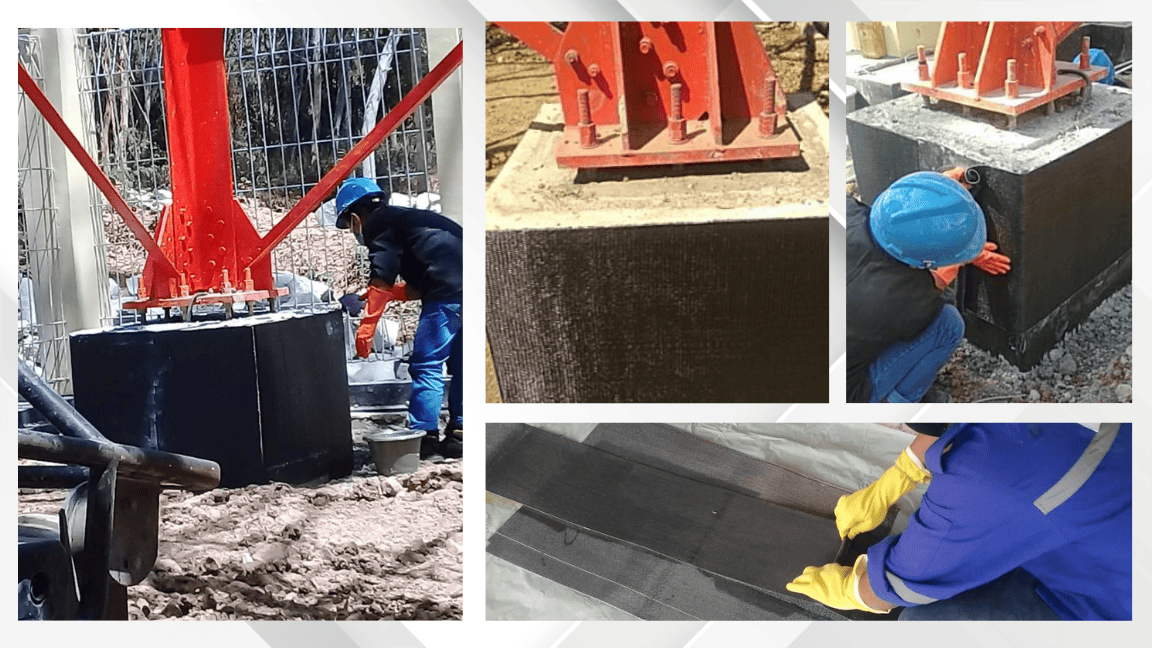
Where a concrete tower support is being considered for FRP/CFRP, the discussion must address the condition and geometry of that member and the intended structural function. Where steelwork is involved, member dimensions, connections, access, and the condition of remaining material influence the feasible detail. Each arrangement needs its own design and work method.
Deliverables for an Owner or Operator
Agree whether the commission is a condition inspection, a capacity evaluation for a stated loading arrangement, a strengthening design, or an execution package. The report should identify the information reviewed, zones inspected, findings, limitations, and recommended next steps.
Where engineering design is included, establish the required calculations, member and connection drawings, material requirements, quantities, installation sequence requirements, and inspection records. Temporary works and temporary stability need defined responsibilities. If separate contractors perform design and installation, identify who reviews the construction submissions and any site changes.
The owner should also know which assumptions depend on verification. These may include equipment data, member or connection details, material condition, or supporting foundation information. Resolve the information needed for the next decision rather than treating a visual inspection as a complete design basis.
Work-at-Height Access and Operating Interfaces
The scope and programme must connect the permanent structural detail with the temporary conditions during the work. Repairing or removing an existing member or connection can change the arrangement while construction is in progress; the relevant support and sequence must be established before execution.
- Agree the access system, equipment, lifting arrangements, work zones, and exclusion area around the tower.
- Identify operating equipment, utilities, or process interfaces requiring isolation or operator coordination.
- Define the responsibilities for temporary stability, temporary supports, and access arrangements.
- Include the inspections required before a member or connection is covered, loaded, or released for the next stage.
- Account for site and weather restrictions and the agreed conditions for suspending or resuming the work.
For a water tower, clarify whether the operating requirement involves an empty, partially available, or otherwise restricted installation during the work. For telecommunications or industrial towers, define the planned equipment arrangement and the operator's access and isolation requirements. These conditions can influence both the method and the programme.
Budgeting Beyond the Reinforcement Material
Access, work at height, temporary works, member fitting, connection details, foundation access, preparation, protection, inspection, and mobilisation can be significant parts of the proposal. Describe the site and the intended work boundary so bidders do not base their prices on incompatible access or operating assumptions.
Separate investigation, design, temporary works, permanent strengthening, protection, and handover documentation in the requested package. Establish how changes to the equipment inventory, hidden deterioration, or additional verification will be handled before they affect execution.
A useful initial enquiry states the tower type and project objective, identifies the affected members or proposed additions, and includes available drawings, equipment information, inspection history, and site access constraints. That gives the engineering and construction teams a practical basis for discussing the next scope.
From Discussion to an Agreed Work Scope
- Share the project objective, location, available records, and the decision your team needs to make.
- Define inspection, verification, testing, and capacity review where the existing information is insufficient.
- Agree recommendations, design deliverables, quantities, and responsibilities before comparing construction proposals.
- Plan the access, work sequence, inspection points, and handover requirements for the agreed construction scope.
Data to Send for a Proposal
Send the tower location and type, height and arrangement, drawings, equipment or tank load changes, member and connection photographs, foundation records, and work-at-height access constraints. Previous reports and modification history are useful where available. If drawings are missing, explain what is known so the required site verification can be identified.
Investigation, design, temporary works, and construction should be identified explicitly in the proposal. Survey fees are waived only after a PO has been issued or a contract has been signed, and the down payment has been received.
Frequently Asked Questions
Can more antennas be added to an existing tower?
The proposed equipment, attachment arrangement, and resulting demands need to be reviewed against the existing structure and condition. Provide the current and proposed equipment information before assuming spare capacity.
Does painting corroded steel restore its capacity?
A protective coating does not replace lost steel or repair a deficient connection. Investigation is needed to establish the condition and whether repair, replacement, or strengthening is required before protection is specified.
Does a leaning tower always need the same strengthening method?
No. The cause may involve the supporting ground, foundations, connections, or the tower structure. The investigation and proposed response need to follow the actual cause and affected elements.
Can an existing condition report support a new equipment addition?
It is useful input, but the proposed equipment and support arrangement still need review. The scope should identify whether the earlier information is adequate and what additional verification or analysis is required.
What tower information is needed when drawings are incomplete?
Send the records you have, tower type and arrangement, photographs with locations, current and proposed equipment, inspection history, and foundation information. The engineering scope can then identify required measurements and verification.
Is a coating package enough where the tower has corrosion?
Protection and structural repair have different roles. The condition and extent of deterioration must be understood so the scope can identify preparation, member or connection work, and the specified protective system.
Who handles the temporary stability during installation?
The proposal must identify the responsible party and required temporary-work or sequence details. These responsibilities need to be agreed before removing, replacing, or modifying members or connections.
What should be included when comparing tower proposals?
Compare the evaluated loading arrangement, investigation, design, members and connections included, access, lifting, temporary works, protection, inspection, mobilisation, and handover records. Check the assumptions behind each programme.
Explore Related Services
Start with structural assessment, define engineering and design deliverables, or discuss a suitable FRP/CFRP installation scope. Browse all six structure types.